Story: Quoc Thai
Photos: Provided by Duong Nguyen
Among the endless stream of images that flash across our screens each day, there are certain letterforms that people recognise instantly, even if they have no idea who created them. A logo for a chart-topping hip-hop album, a deliberately messy title scrawled across a record cover, or a handwritten mark that feels both raw and alive. Behind many of these visuals is Duong Nguyen, a Vietnamese-American lettering and typography designer based in Los Angeles whose work has helped shape the visual language of a generation of artists, from Kanye West, Playboi Carti, and Kendrick Lamar to A$AP Rocky, Bad Bunny, and Juice WRLD.
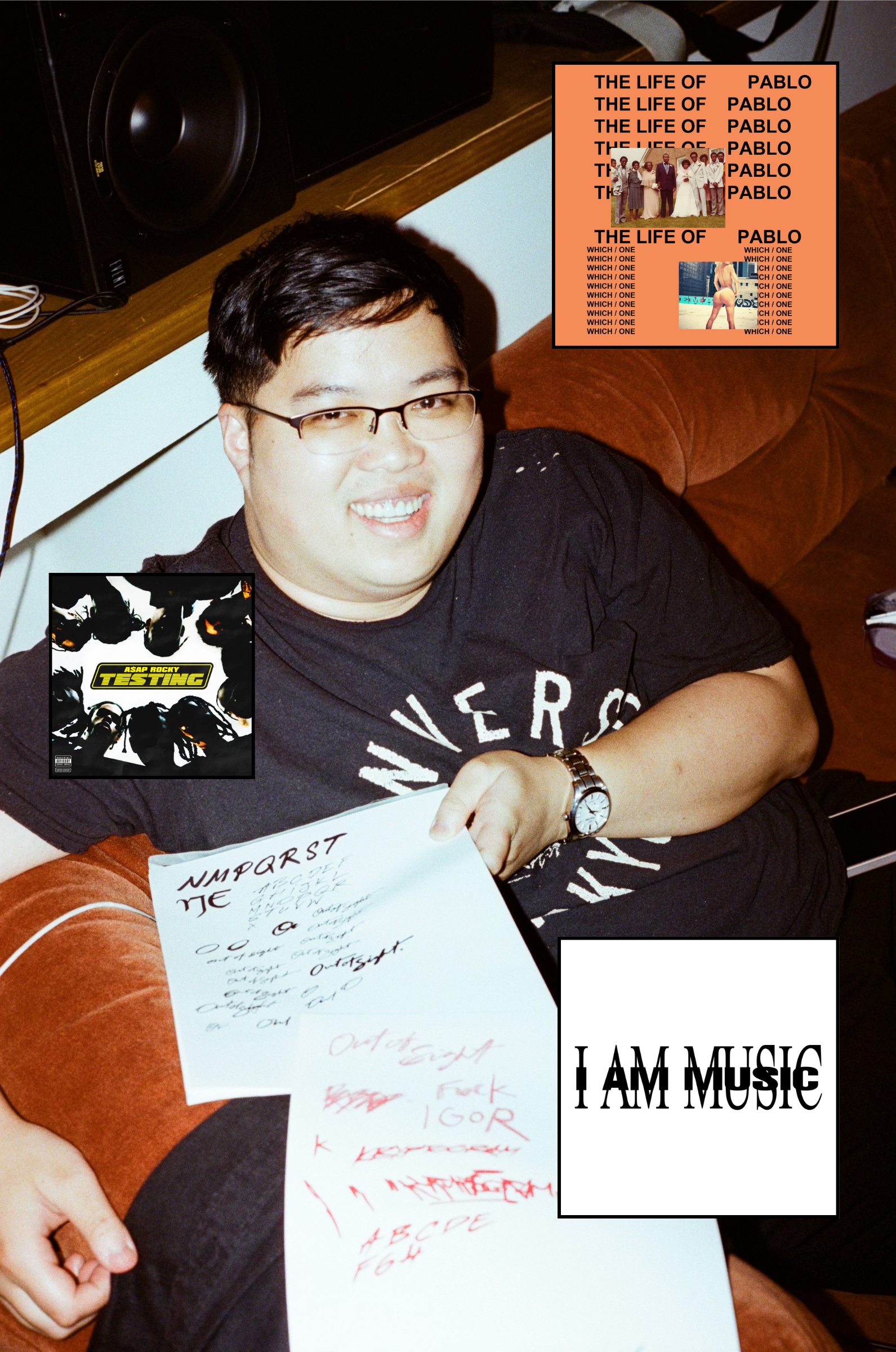
The surprising thing is that Duong rarely talks about any of those names.
Throughout our conversation, he spent far more time discussing coffee, video games, favourite pens, and the Vietnamese language than he did celebrity clients. “I like being interviewed by Asian people more,” he laughed at the start of our call. “A lot of people only want to ask about the rap projects. But that’s just work. I’m pretty different outside of that.”
At 29, Duong is juggling more than 30 projects at once. His lifestyle runs counter to the image many people have of a professional designer. He doesn’t wake up early. He doesn’t work traditional office hours. Instead, his most productive hours fall between midnight and three in the morning. “I realised that’s when I get into flow state. My best ideas always happen during that time.” Daytime is reserved for emails, meetings, and technical tasks. Nighttime is when the lettering begins.
While many younger designers have moved entirely into digital workflows, Duong remains deeply attached to pens, ink, paper, and physical surfaces. He experiments, stains pages with ink, and sketches by hand before scanning everything into a computer for further refinement. The process may take longer, but in exchange it gives him something he believes technology still cannot replicate. To him, the computer is simply a finishing tool. The expressive essence always comes from the hand. His lettering often carries smudges, tremors, imperfections, and a sense of roughness. Yet it is precisely those imperfections that make the work feel alive. “I like things with texture, grain, and human traces,” he said. “When things get too clean, sometimes they lose emotion.”
Outside of design, Duong is equally known among friends for his love of coffee. There is almost always a cup somewhere on his desk, and his phone contains an ever-growing list of cafés he hopes to visit one day. Although he has not returned to Vietnam in sixteen years, since he was thirteen years old, he still closely follows the country’s rapidly evolving coffee culture.
“I’ve already saved a lot of coffee shops in Vietnam,” he said. “There’s so much I want to see when I go back.” In Duong’s imagination, present-day Vietnam appears through newly opened cafés, independent fashion stores, and a creative scene that seems to be constantly evolving. It is a version of Vietnam he has not yet witnessed firsthand, but one he remains deeply curious about from afar. His connection to the country does not come from having grown up there. Duong was born and raised in the United States. Yet Vietnamese has always been present in his household.
“My dad speaks English, but he still always speaks Vietnamese. My mom almost only speaks Vietnamese.”
It creates a feeling familiar to many members of the Vietnamese diaspora: living between two languages, two value systems, and sometimes two versions of oneself. “When I speak Vietnamese, I feel like a different person,” he said. “That language pulls out parts of my personality that English doesn’t.”
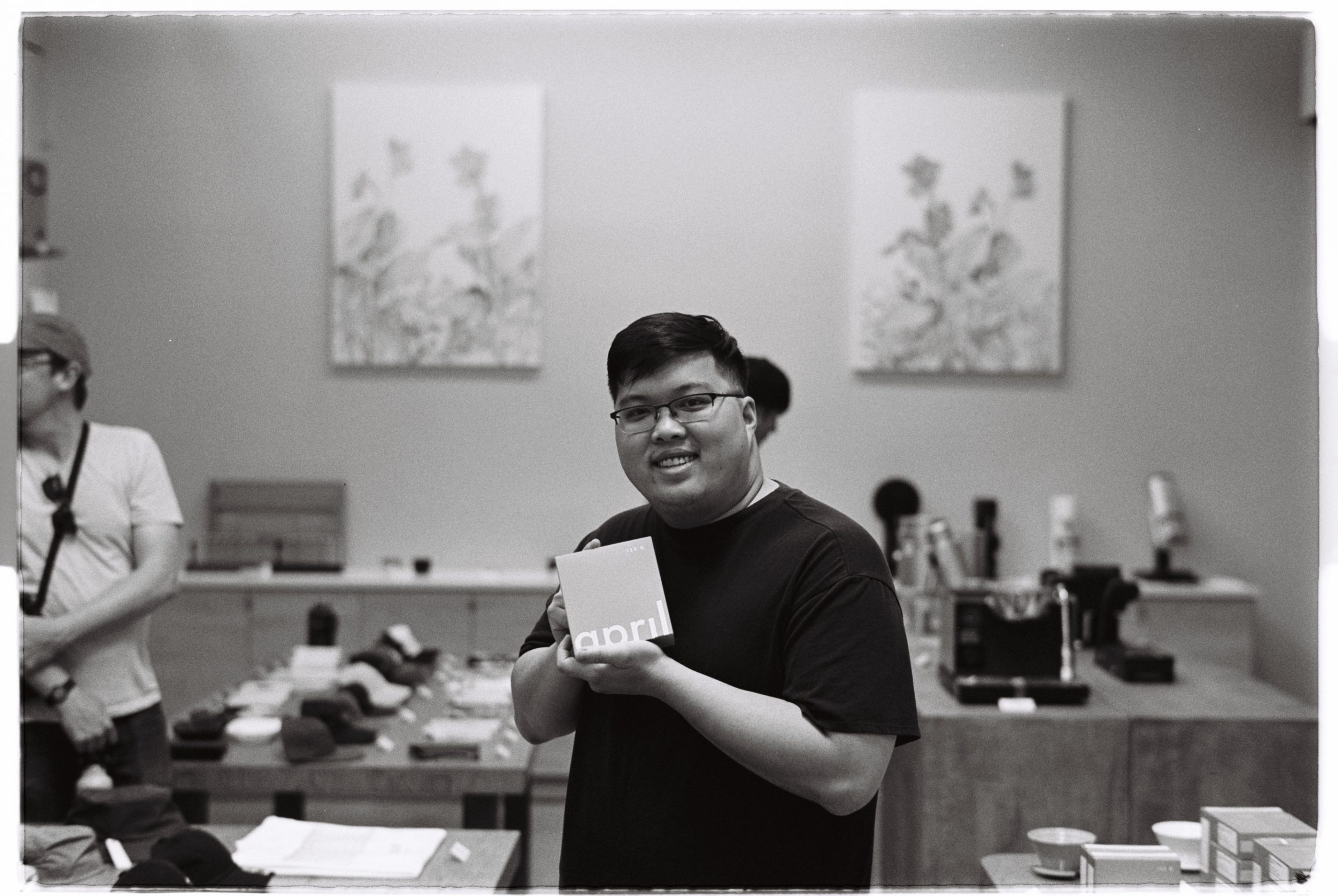
Family memories are also where Duong sees the clearest traces of his upbringing. He laughed while describing the familiar image of a traditional Vietnamese mother who dreams of her children becoming doctors, lawyers, or pursuing similarly stable careers. “Design was never part of the conversation.” The early years were not easy. Like many children of Asian immigrant families, artistic success felt difficult to explain compared to professions considered secure or respectable. Duong remembers being told that he would never make a living through design. Then one day, his work appeared on billboards in the real world. “When they saw it existing out there, that’s when it became real.” It was the moment when the distance between personal passion and family recognition began to narrow.
Despite having worked with some of the world’s biggest artists, Duong still carries the curiosity of someone who feels he is learning. Throughout our conversation, he spoke more about pens, sketchbooks, and process than about famous collaborators. Perhaps what drives him is not fame, but the thrill of discovery. “I always want to create something that nobody has done before.” That mindset appears everywhere— from gaming and music to typography itself. In a field where trends change constantly and imitation is inevitable, Duong continues to see originality as the strongest motivation to keep creating.
If typography is his profession, then coffee and food are perhaps his second great love. He can spend twenty minutes talking about a pour-over, a favourite restaurant, or a bowl of noodles with the same enthusiasm he brings to discussing design. “Food excites me,” he replied almost immediately when asked what still inspires him outside of typography. “Food brings people together.”
In Duong’s mind, food and design have more in common than most people realise. Both begin with raw ingredients. Both rely on intuition, experimentation, and creativity. Most importantly, both have the power to connect people. And like many Vietnamese people living far from home, his memories of Vietnam are often tied to food more than anything else.
When the conversation shifted toward Vietnamese noodles, Duong immediately became animated. Asked about his favourite noodle dish, he burst out laughing. “Now that’s the most important question today.”
After some deliberation, he placed bánh canh firmly at the top of his list. The thick, chewy noodles and rich broth remain among the flavours he loves most. Bún bò Huế is another longtime favourite, though recently he has found himself seeking out less mainstream dishes.
“I love bún riêu,” he said. “But there aren’t many places near me that make it well. The broth is usually too clean. Bún riêu should feel rich and a little messy.” The answer sounded remarkably similar to his design philosophy. While many people chase perfection, Duong is drawn to things that retain a certain roughness, spontaneity, and evidence of the human hand. Perhaps that is why he gravitates toward a deeply flavoured bowl of bún riêu, a strong Vietnamese iced coffee, or an ink mark that remains imperfect on the page.
It has been sixteen years since Duong last returned to Vietnam. Yet through conversations with family in Vietnamese, coffee shops saved on his phone, and even friendly debates about whether bánh canh or bún riêu deserves the top spot, home never seems very far away.
Perhaps on his next visit, among the streets, cafés, and creative communities he has followed from across the Pacific, Duong Nguyen will find inspiration for a new set of letterforms. Letterforms that carry both Los Angeles and Vietnam. Both the digital world and the distinctly human traces of ink, paper, and time.


